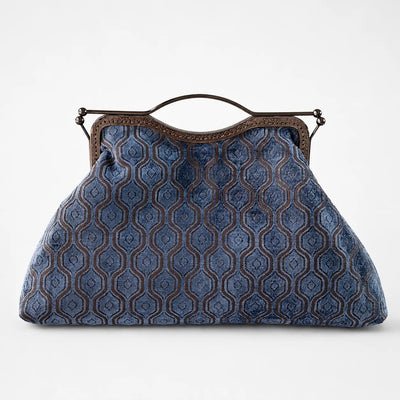
The machine is better at almost everything.
It is faster. It is more consistent. It does not tire, does not lose concentration, does not have a bad day. It produces the same result on the ten-thousandth unit that it produced on the first. In terms of the narrow metrics by which production is typically measured — speed, consistency, cost per unit — the machine wins without contest.
And yet handmade persists. Not as nostalgia, not as artisanal marketing, not as a premium tier of the same product — but as a genuinely different category of object, sought by buyers who understand the difference and are willing to pay for it. The question worth asking is not whether handmade can compete with machine production on the machine’s terms. It cannot. The question is why, on different terms, it consistently wins.
What Machines Cannot Do
The machine’s strengths are real, but they are also its limitations. Consistency, in production, means the elimination of variation. And variation — the specific decision made for a specific piece by a specific person at a specific moment — is precisely what gives a handmade object its character.
A machine produces a category. A craftsperson produces a thing. The distinction sounds abstract until you hold both objects in your hands, and then it is immediately apparent. The machine-made object is correct in every measurable dimension and present in no dimension that cannot be measured. The handmade object has something else — a quality of attention that is embedded in its structure, visible in its details, and felt in the way it sits in the hand.
This quality is not mystical. It is the direct consequence of a person making decisions. The tension of a stitch placed by hand reflects a judgment about that specific seam at that specific moment. The way a pattern is aligned at a join reflects a decision made by someone who was looking at this particular piece and responding to what they saw. These decisions accumulate. The object that results is not a version of a specification. It is the record of a series of choices made by a person who was paying attention.
Machines cannot pay attention. They can only execute. The difference between execution and attention is the difference between a product and an object.
Machine Made vs Handmade
The Argument Against Handmade — and Why It Misses
The standard argument against handmade as a category is that it romanticises imperfection. That what is described as character is simply inconsistency. That the premium charged for handmade work is a premium for inefficiency dressed in the language of craft. That a well-calibrated machine produces a more precise result than a human hand, and precision is what quality means.
This argument is coherent on its own terms. And its terms are exactly wrong.
Precision, in the production of objects meant to be used and carried and owned for years, is not the primary value. The primary value is suitability — the degree to which an object fits its purpose, responds to its material, and holds its integrity under the conditions of actual use. Precision in the machine sense means conformity to specification. Suitability in the craft sense means something more complex: the accumulated judgment of a person who understood what they were making and made decisions accordingly.
A machine-made bag is precisely what it was specified to be. A handmade bag is what the craftsperson understood it needed to be — and these are not the same thing. The difference shows up over time, at stress points, in the way the object ages. The machine-made bag fails where the specification did not anticipate the conditions of use. The handmade bag, made by someone who understood those conditions and built for them, does not.
The Six Differences That Matter
| Machine Made | Handmade | |
|---|---|---|
| Decision-making | Pre-programmed, fixed | Responsive, specific to piece |
| Consistency | Identical across units | Each piece is itself |
| Stress points | Built to specification | Built to conditions of use |
| How it ages | Degrades uniformly | Develops character |
| Production volume | Unlimited | Finite — scarcity is real |
| Relationship to owner | Product, replaceable | Object, irreplaceable |
What Handmade Requires of the Buyer
Handmade objects make demands on the people who own them. Not large demands, but real ones.
They require a willingness to pay a price that reflects the actual cost of making something by hand, in limited quantity, from quality materials. This price is higher than the machine-made equivalent, and it is higher for reasons that are specific and defensible rather than arbitrary. The buyer who understands this pays it without resentment. The buyer who does not will always find it too high.
They require a longer horizon. A handmade object is not evaluated correctly at the point of purchase. It is evaluated over the years of use that follow — in how it holds its form, in how it ages, in whether it remains something you are glad to own rather than something you are merely still using. The buyer who thinks in seasons will not understand what a handmade object is for. The buyer who thinks in decades will.
And they require attention. A handmade object rewards being looked at carefully — at the construction detail, at the material, at the specific decisions that are visible in the finished piece. This attention is not required; the object works perfectly well without it. But the buyer who brings it will find more in the object than the buyer who does not. Handmade is, among other things, an invitation to pay attention.
“A machine produces a category. A craftsperson produces a thing. The difference is immediately apparent when you hold both in your hands.”
Why It Wins
Handmade wins not by competing with machine production on its own terms but by offering something that machine production structurally cannot provide: an object made by a person, for a person, with the full weight of human judgment applied to every decision in its making.
This is not a small thing. It is, arguably, the thing — the quality that separates an object from a product, an owner from a consumer, a relationship from a transaction. In a world where machine production has made almost everything available to almost everyone, the experience of owning something made specifically, by hand, with attention, is rarer than it has ever been.
Rarity, in this context, is not a marketing position. It is a description of what the world actually contains. There are very few people making things by hand, from quality materials, in small quantities, with the seriousness that the work requires. The objects they produce are rare because the conditions that produce them are rare. And rare things, genuinely rare, are worth finding.
A Note on Hirsch Atelier
Every piece in the Hirsch Atelier collection is made by hand, from Italian woven fabric — gobelin, jacquard, or velvet — in strictly limited quantity. Some pieces exist as single objects. None are produced at volume.
This is not a positioning statement. It is a description of how the work is done. The objects that result from this process are available at hirsch.ae — for buyers who think in decades, who pay attention, and who understand what they are looking for.
FAQ
Why is handmade better than machine made?
Handmade is not better on every measure. Machines are faster, more consistent, and cheaper per unit. Handmade is better on the measures that matter for objects meant to be owned and used over years: responsiveness to the specific material, judgment at stress points, character that develops rather than degrades, and a relationship between object and owner that a product cannot provide.
Is handmade worth the higher price?
Over a long enough horizon, usually yes. A handmade object built from quality materials and constructed with care will outlast multiple machine-made equivalents. The cost per year of use is typically lower, despite the higher initial price. The non-financial value — the character of the object, the relationship with something made specifically rather than generically — does not appear in this calculation but is real.
How can I tell if something is genuinely handmade?
Ask specifically: who made this, and how? A maker who produces genuinely handmade work will be able to describe the process in detail — the construction sequence, the decisions made at each step, the specific skills involved. Vague descriptions of artisanal quality or handcrafted finishing are not the same answer. The genuine article is specific.
Do handmade bags last longer than machine-made ones?
Generally yes, particularly at stress points — seams, corners, handle attachments — where the judgment of a skilled hand produces a different result from a machine executing a specification. The material quality also tends to be higher in genuinely handmade pieces, because makers who work by hand select materials with the same care they bring to the construction.
Where can I find genuinely handmade handbags in the UAE?
Hirsch Atelier produces handmade bags from Italian gobelin, jacquard, and velvet in limited quantities. Each piece is made by hand. The collection is available at hirsch.ae.