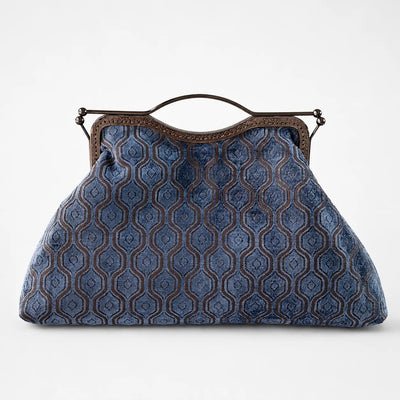
The story that Dubai tells about itself is one of scale, of spectacle, of the visible accumulation of the extraordinary. It is not an inaccurate story. But it is an incomplete one.
Beneath the surface of a city built around display, there has always been a different kind of buyer. She has existed here for as long as the luxury market has — quieter than the narrative, more particular than the offer, consistently underserved by brands that mistake visibility for desire.
In the last several years, this buyer has become more visible. Not because she has changed — she has not — but because the broader conversation about luxury has begun to catch up with what she already knew. The logo is not the point. The object is the point. And the object, for too long, has not been good enough.
Who She Is
She is not a demographic. She is a disposition.
She is typically, but not exclusively, in her thirties or forties. She has owned the logos — often more than once — and found them insufficient. Not because they were poorly made, necessarily, but because the satisfaction they provided was of a specific and limited kind: the satisfaction of recognition, of legibility, of belonging to a category that other people could read instantly. That satisfaction has a short half-life. Once it fades, what remains is the object itself. And the object, stripped of its recognisability, often has less to say than was promised.
She reads. She travels specifically rather than extensively. She has opinions about fabric that most people around her do not share and does not particularly need them to. She buys less than she used to, and she is more considered about what she buys. She is not interested in being told what is fashionable. She is interested in understanding what is good.
She is present in Dubai in larger numbers than the luxury market here has historically acknowledged. The market has been organised around a different buyer — one for whom visibility is the primary value, for whom the logo is the product. This buyer exists too, and in significant numbers. But she is not the only buyer, and she is increasingly not the most interesting one.
Old Luxury vs New Luxury — The Shift
What She Wants — and Cannot Find
The gap between what this buyer wants and what the Dubai luxury market offers her is specific and consistent.
She wants objects that reward attention. Not objects that announce themselves from across a room, but objects that reveal themselves gradually — that have more to offer the closer you get. A fabric with visual depth. A construction detail that is only visible when you look for it. A piece that has been made with the assumption that the person carrying it will notice these things.
She wants limited production in a meaningful sense. Not the manufactured scarcity of a waiting list designed to create desire, but the genuine scarcity that results from making things carefully, by hand, in small numbers. She understands the difference. She has seen both, and she is not interested in the performance of the first.
She wants a brand that can tell her specifically what something is made from and how. Not a heritage narrative. Not a campaign image. The actual information: where the fabric comes from, how the piece is constructed, why these decisions were made. She is capable of evaluating this information, and she prefers to be treated as though she is. This is exactly the kind of thinking explored in what makes a handbag worth the price.
And she wants something that does not look like everything else. Dubai's luxury retail environment is remarkably homogeneous. The same brands, the same product categories, the same visual language, repeated across multiple malls and multiple districts. The buyer who has been through this environment many times is not looking for another version of what she has already seen. She is looking for something genuinely different — and increasingly, she is looking beyond the logo to find it.
"She is not looking for another version of what she has already seen. She is looking for something genuinely different — and she is willing to find it outside the places she has always been told to look."
Why the Old Playbook No Longer Works
| Old Luxury Model | What She Actually Wants | |
|---|---|---|
| Signal | Logo, monogram, recognisable hardware | Material quality, construction detail |
| Scarcity | Manufactured waiting lists | Genuine limited production |
| Information | Heritage narrative, campaign imagery | Specific material and craft details |
| Design logic | Seasonal, trend-driven | Enduring, trend-independent |
| Retail experience | Mall flagship, standardised | Direct, specific, honest |
| What she feels | Recognised by others | Satisfied by the object itself |
This shift is part of a broader cultural movement we explore in what quiet luxury actually means — an approach that prioritises material and construction over visible branding.
The Dubai Context
Dubai is an interesting place for this conversation because the contrast is so legible.
In a city where display is the default, the choice to step outside it is more deliberate — and more visible — than it would be elsewhere. The buyer who carries something unrecognisable in a context where recognition is the norm is making a statement, even if the statement is precisely that she is not interested in making statements. The quietness reads louder here than it would in cities where it is more common.
There is also a specific quality to Dubai's international population that is relevant. A significant proportion of the city's luxury buyers have lived in multiple countries, have been exposed to luxury markets in Europe and Asia, and bring a comparative frame that purely local buyers may not have. They have seen what European craft looks like. They understand the difference between a bag made in a small Italian atelier and a bag made in a factory and finished by hand. They are not easily impressed by the performance of quality. They can read the actual thing.
This buyer is not rare in Dubai. She is simply not the loudest. She has been here all along, buying less than she might, because what she was looking for was not on offer. That is beginning to change — and a small but growing number of handmade alternatives in the UAE are emerging to meet her.
A Note on Hirsch Atelier
Hirsch Atelier was built for this buyer. Not as a positioning statement — as a practical consequence of the decisions made about materials, construction, and production volume.
Every piece is made from Italian woven fabric — gobelin, jacquard, or velvet — chosen for its specific character and suited to an object meant to last. Each piece is constructed by hand. Production is strictly limited. The design does not follow seasonal direction.
These decisions were not made to appeal to a market segment. They were made because they are the right decisions for the kind of object we wanted to make. The buyer they appeal to is the buyer who was already looking for exactly this — and finding, consistently, that it was not available.
It is available now. The pieces are at hirsch.ae.
FAQ
What is quiet luxury in Dubai?
Quiet luxury in Dubai describes an approach to dressing and accessorising that prioritises material quality and genuine craft over visible branding and logo recognition. In a city where display is the default, the choice to step outside it is particularly deliberate — and particularly legible to those who know what they are looking at.
Where can I find non-logo luxury bags in Dubai?
The mainstream luxury retail environment in Dubai is organised almost entirely around recognisable brands. Alternatives — pieces where the material and construction are the point rather than the name — are less visible but available. Hirsch Atelier produces handmade bags from Italian woven fabric in limited quantities, available at hirsch.ae.
Is quiet luxury a trend in the UAE?
It is more accurate to describe it as an emerging preference than a trend. The buyers it describes have existed in the UAE market for some time. What has changed is the broader cultural context — a growing conversation about the limits of logo-driven luxury — that makes this preference more visible and more explicitly named.
Who is the typical Hirsch Atelier customer?
There is no typical customer, but there is a consistent disposition: someone who has been through the logo market and found it insufficient, who is interested in understanding what things are made from and how, who prefers objects that reward attention over objects that announce themselves. She is present in Dubai in significant numbers, and she has been consistently underserved by the available offer.